PHENET Workshop at INRAE Montpellier: Connecting Phenotyping Networks for Next-Gen Crop Monitoring
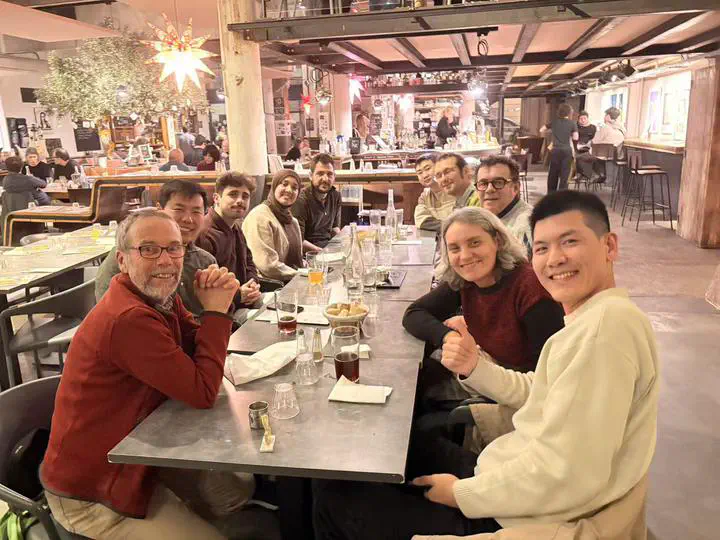
Our team Dong Bai and Kang Yu participated in the PHENET workshop hosted by INRAE in Montpellier, 12–15 Jan 2026, a vibrant meeting that brought together researchers and infrastructure stakeholders working on plant phenotyping, data interoperability, and scalable approaches for crop monitoring. The workshop was a great opportunity to connect across institutions and disciplines—from field phenotyping platforms to satellite remote sensing and AI-driven analytics—and to align on shared needs for the next phase of phenotyping network development.
Why This Workshop Matters for Precision Agriculture
As phenotyping moves from plot scale to farm and regional scales, data consistency, metadata standards, and robust workflows become just as important as sensors and models. Discussions at PHENET highlighted three priorities that strongly resonate with our lab’s direction:
- Interoperable phenotyping pipelines: Harmonized measurements and metadata that enable cross-site and cross-year comparability.
- Analysis-ready datasets: High-quality, well-documented data streams that can support crop model simulation, machine learning, and AI approaches.
- Scaling to real-world decision support: Translating phenotyping outputs into actionable agronomic insights (e.g., stress diagnosis, nutrient management, and yield stability).
What We Shared from the TUM Precision Ag Lab
We contributed perspectives and examples from our work on satellite-based on-farm experiments and crop nitrogen monitoring, including:
- Building workflows that combine radiative transfer modeling + machine learning to improve robustness across environments.
- Emphasizing transferability and uncertainty awareness as key requirements for operational deployment.
Key Takeaways
A few themes repeatedly surfaced and will inform our next steps:
- Data standards are an enabler of innovation: Shared formats and rich metadata reduce friction and accelerate collaboration.
- Benchmarking across platforms is essential: Moving toward transparent, comparable evaluation of sensors and models.
Looking Ahead
We are excited to build on the connections made at INRAE Montpellier and explore collaborations within PHENET around:
- Harmonized phenotyping and remote sensing protocols,
- Shared datasets for stress trait benchmarking,
- Reproducible pipelines that support multi-site generalization.
Many thanks to the LEPSE Laboratory at INRAE Montpellier and the PHENET partners and participants for an inspiring workshop and a welcoming environment.

Drone Pag
Drone of Artificial Intelligence
My research interests include robotics, mobile computing and AI.