TUM Team Visits the University of Georgia — GlobalNitroLink Return Exchange
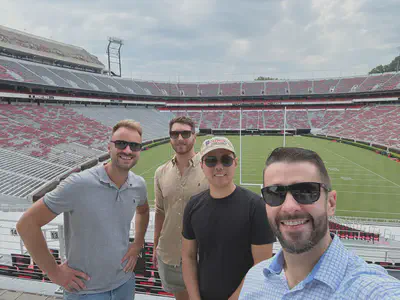
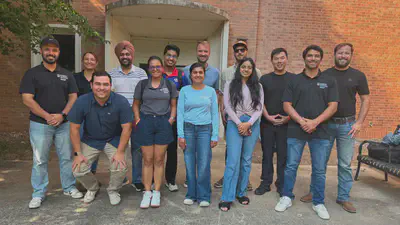
From 24–31 July 2026, a team from the TUM School of Life Sciences, travelled to the University of Georgia (UGA) in Athens, GA, for the reciprocal leg of the GlobalNitroLink exchange. Prof. Kang Yu from the TUM Precision Agriculture Lab, Dr. Martin Mittermayer and PhD student Ludwig Hagn from the TUM Chair of Organic Agriculture and Agronomy, made the journey from Munich via Atlanta to Athens for a week of joint seminars, field visits, lab tours, and planning meetings with our UGA partners.
The visit was carried out under the framework of GlobalNitroLink, a TUM–UGA international exchange project funded through the BayIntAn programme of the Bavarian Research Alliance (BayFOR), which supports new research partnerships between Bavarian universities and leading international institutions. It followed the joint UGA–TUM seminar at Weihenstephan in June 2026, when Prof. Leonardo Bastos and Prof. Lorena Lacerda visited TUM — completing the two reciprocal research visits at the heart of the project.
Day 1 — Campus, IIPA, and International Partnerships
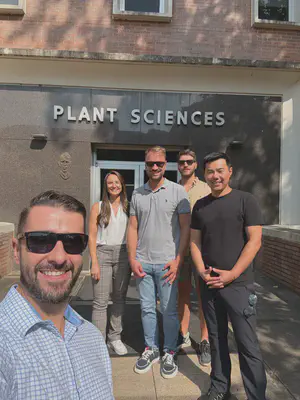
The first full day (27 July) began with a tour of the UGA campus, Bookstore, Library, the Innovation Distric, Miller Plant Sciences Building, and the Institute for Integrative Precision Agriculture (IIPA) — UGA’s new flagship initiative bringing together engineering, data science, and the agricultural and environmental sciences.
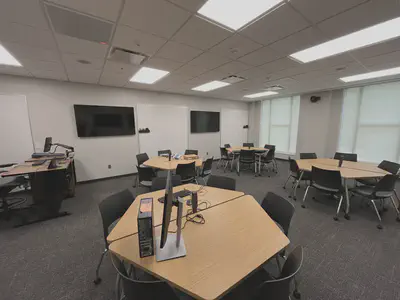
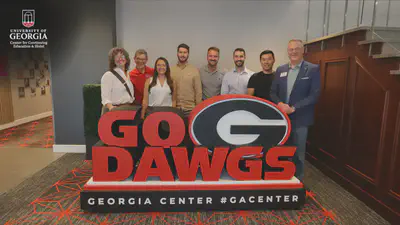
A central working meeting brought together the TUM team with the UGA Office of International Programs (Victoria McMaken and Todd Applegate), the Director of the IIPA, Prof. George Vellidis, and the Office of Global Engagement (Prof. Martin Kagel, Dr. Leah Peck, and Dr. Yana Cornish) to explore opportunities for research and educational collaboration — from joint projects to student exchange.
Day 2 — Iron Horse Farm Research Station
28 July, the team visited UGA’s Iron Horse Farm research station. The team toured the station’s facilities, machinery, and drone and sensor technology, and walked the on-farm nitrogen and irrigation trials in soybean, maize, and cotton.
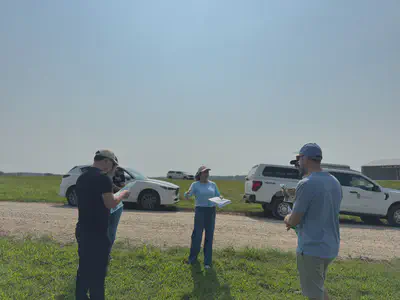
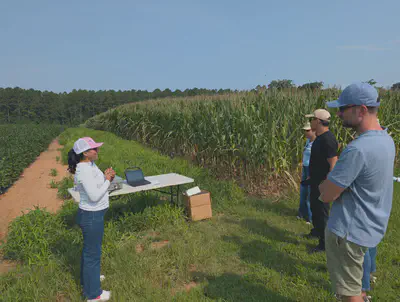
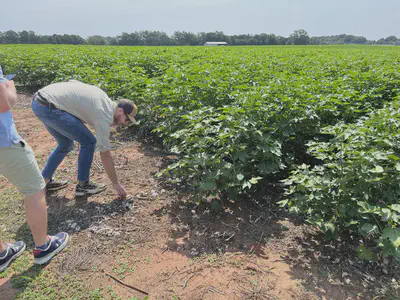
UGA PhD students presented their work in an afternoon seminar, sparking discussion on latest results from field trials and novel modeling work, linking satellite-derived crop indicators with nitrogen and irrigation decision-making and yield prediction — the core scientific theme of GlobalNitroLink.
Day 3 — Joint TUM–UGA Seminar and Lab Tours
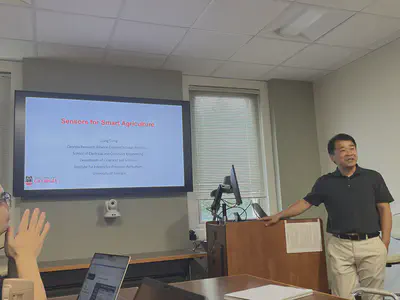
The morning of 29 July was a joint seminar day. The TUM team gave three talks — by Prof. Kang Yu, Dr. Martin Mittermayer, and Ludwig Hagn — on satellite- and sensor-based crop monitoring, digital yield mapping and nutrient management, and UAV crop monitoring at TUM.
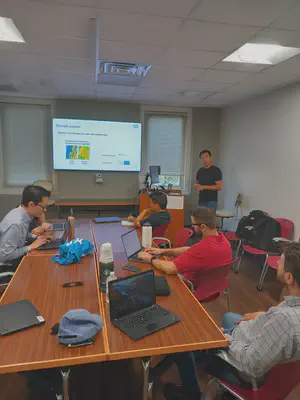
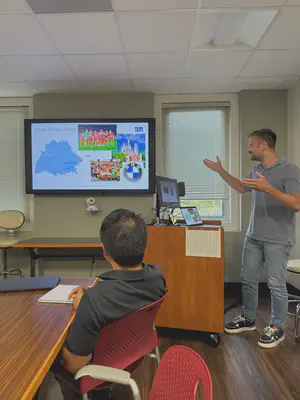
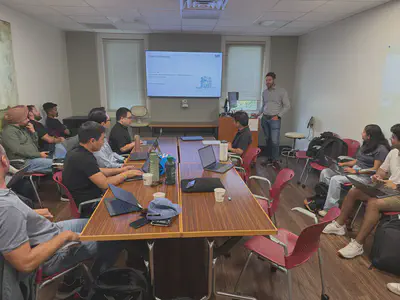
Four UGA faculty members — Profs. Liang Dong, Xin Zhang, Zhihang Song, and Tao Liu — presented their research spanning wearable plant sensors, agricultural robotics, controlled-environment phenotyping, and crop sensing.
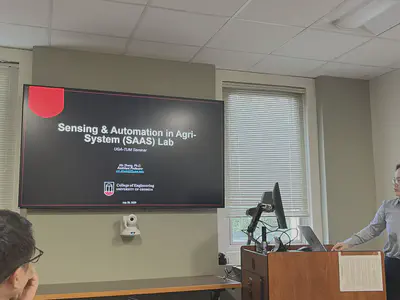
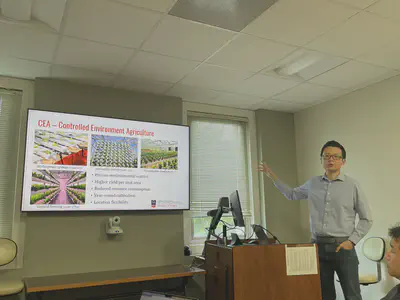
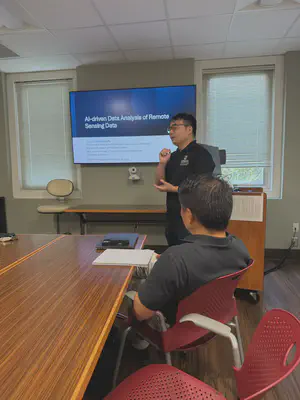
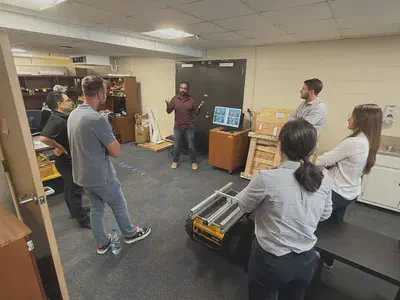
The afternoon featured a series of laboratory tours across the IIPA: Xin Zhang’s Sensing & Automation in Agri-Systems (SAAS) Lab and its agricultural robotics, Zhihang Song’s controlled-environment-agriculture (CEA) phenotyping facilities, Liang Dong’s wearable sensor technology, and the campus Drone Service Center — closing with a wide-ranging technical discussion.
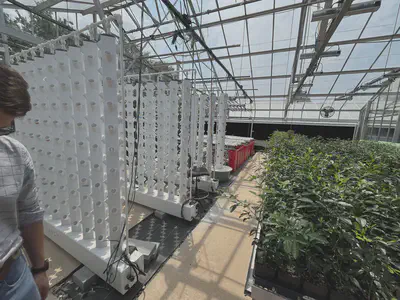
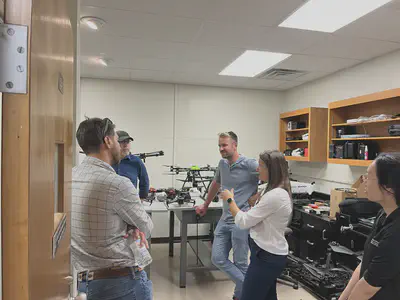
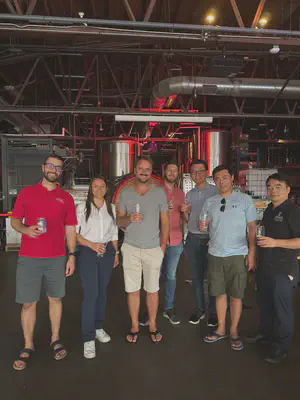
In the evening, Lorena Lacerda, Leo Bastos, Tao Liu, and Zhihang Song joined the TUM team for a memorable beer-tasting tour at the Athens Farmers’ Market — a warm end to an intensive week.
Connections and Next Steps
The visit closed the loop on the two reciprocal exchanges of GlobalNitroLink and turned the conversations started in Weihenstephan into concrete plans on the ground in Athens. The shared focus — integrating multi-temporal satellite crop indicators with yield monitoring for more robust and transferable nitrogen management — gives TUM and UGA a natural foundation for continued joint research, comparison of precision N-management approaches across contrasting agro-climatic regions, and future student exchange.
Thanks
Warm thanks to our hosts at the University of Georgia — the Institute for Integrative Precision Agriculture, the Office of International Programs, and the Office of Global Engagement — and especially to Prof. Leo Bastos and Prof. Lorena Lacerda for a generous and inspiring week. We look forward to building on this transatlantic partnership.
— TUM Precision Agriculture Lab

Drone Pag
Drone of Artificial Intelligence
My research interests include robotics, mobile computing and AI.