GreenWindows4_0: Reduction of Greenhouse Gas Emissions and Ammonia by Optimized Nitrogen Management
Overview
GreenWindows4_0 is a research project funded by the Federal Ministry of Food and Agriculture (BMEL), jointly led by Prof. Urs Schmidhalter and Prof. Kang Yu at the Technical University of Munich (TUM). The project develops precision tools and workflows for optimizing nitrogen (N) fertilization in arable farming, with the dual goal of reducing greenhouse gas (GHG) emissions (e.g., N₂O) and ammonia (NH₃) volatilization while maintaining crop productivity and N use efficiency.
Objectives
- Optimize N application timing and rates using satellite and UAV remote sensing to identify application windows that minimize emissions.
- Monitor crop N status across field-scale experiments using hyperspectral and multispectral sensors.
- Develop emissions-aware decision support linking remote sensing outputs to N management recommendations.
- Improve N use efficiency (NUE) at the farm scale through data-driven approaches combining biophysical modelling and machine learning.
Methodology
The project integrates:
- Satellite remote sensing (e.g., Sentinel-2) for large-area crop N status monitoring and yield estimation
- UAV-based multispectral and hyperspectral imaging for high-resolution field phenotyping
- Radiative transfer modelling and machine learning for robust trait retrieval
- Field experiments with variable N fertilization treatments across multiple sites and seasons in Bavaria
Project Partners
- Technical University of Munich (TUM)
- AGRAVIS NetFarming GmbH
- Funded by: Federal Ministry of Food and Agriculture (BMEL)
Duration: 01.01.2019 – 31.12.2022
Related Publications
- Mokhtari et al. (2025). Satellite-based winter wheat yield estimation with a newly parameterized LUE model based on crop water status and leaf chlorophyll content. Field Crops Research. View
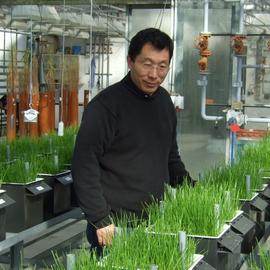
PD. Dr. Yuncai Hu
Senior Researcher
My research interests include Remote sensing, Precision N nutrient management, Plant phenotyping for complex traits of abiotic stress tolerance, Agricultural N emissions, and Physiological mechanisms of plant responses to abiotic stresses.
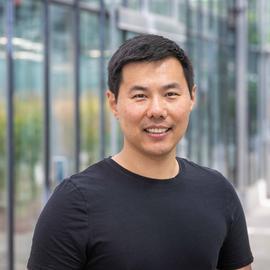
Prof. Dr. Kang Yu
Professor of Precision Agriculture
My research interests include precision crop farming, hyperspectral remote sensing, and AI in agriculture.