PAGrid: A probabilistic area-weighted gridding method for seamless mapping of sentinel-3 swath data
Abstract
Swath-based remote sensing data often exhibit spatial discontinuities after mapping to latitude-longitude grids at a regular spacing due to uneven sampling caused by varying viewing angles and limitations of the conventional center point-based gridding method (CPGrid). A more complex area-weighted gridding method can enhance spatial continuity, but it requires geometric calculations for each grid and is computationally intensive, especially for large-scale satellite imagery. To balance accuracy and efficiency, we proposed a probabilistic area-weighted gridding method (PAGrid), which approximates area-weighting by aggregating results from multiple randomized spatial perturbations. The performance of PAGrid was evaluated using all available Sentinel-3A and 3B observations in 2022 over Germany. Using the canopy absorption coefficient by chlorophyll in the red-edge band ($\alpha$RE) as a test variable, we generated 8-day composites and compared results from CPGrid and PAGrid methods. PAGrid increased the median percentage of valid grid cells from 85% to 93% and reduced temporal fluctuations by 21% compared to CPGrid. Additionally, PAGrid improved the correlation (R2) between Sentinel-3A and 3B $\alpha$RE from 0.73 to 0.84, indicating enhanced data consistency. These improvements indicate that PAGrid is a practical and efficient approach for generating consistent and continuous gridded time series from swath-based satellite observations.
Dong Li, Anirudh Belwalkar, Tao Cheng, & Kang Yu (2026). PAGrid: A probabilistic area-weighted gridding method for seamless mapping of sentinel-3 swath data. Remote Sensing of Environment, 333: 115165.
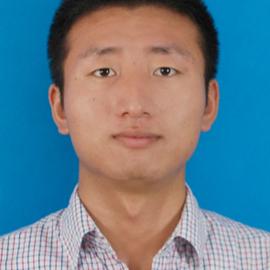
Dr. Dong Li
Research Scientist
My research interests include vegetation remote sensing and precision agriculture.
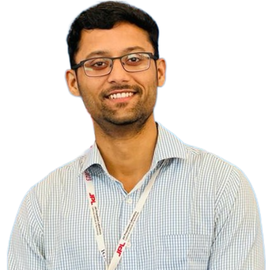
Dr. Anirudh Belwalkar
Postdoctoral Researcher
My research interests include hyperspectral remote sensing of vegetation and precision agriculture.
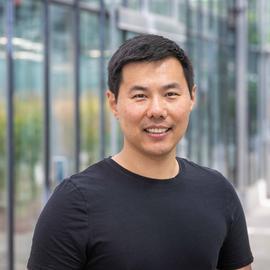
Prof. Dr. Kang Yu
Professor of Precision Agriculture
My research interests include precision crop farming, hyperspectral remote sensing, and AI in agriculture.