Identifying optimized spectral and spatial features of UAV-based RGB and multispectral images to improve potato nitrogen content estimation
Abstract
Selecting optimal input features for the machine learning (ML) models is crucial in estimating plant nitrogen content (PNC). The goals of this study were to (i) identify optimal spectral indices and texture features from RGB and multispectral (MS) images and (ii) improve the accuracy of PNC prediction by combining optimal features with ML. The standard and variational heteroscedastic Gaussian process regression (SGPR and VHGPR) were trained using different image features from the 2020-2021 potato nitrogen fertilizer experiments. Based on the evaluation of RReliefF algorithm, the RGB-based multi-scale texture and MS-based spectral indices were the most important for PNC. The root mean square error (RMSE) of the models using RGB-based texture (RMSE = 0.36-0.39%) was slightly lower than those based on spectral indices (RMSE = 0.38-0.40%). For the combined RGB and MS data, spectral indices were the important input features for the SGPR and VHGPR models. The optimized mND705 was selected as the most critical spectral indices for PNC prediction. Incorporating RGB-based texture features and MS-based spectral indices into the VHGPR model achieved the highest prediction accuracy (RMSE = 0.29%). In conclusion, combining the spectral indices with texture features can help accurately estimate PNC in the fields.
Hang Yin, Haibo Yang, Yuncai Hu, Fei Li, & Kang Yu (2025). Identifying optimized spectral and spatial features of UAV-based RGB and multispectral images to improve potato nitrogen content estimation. Smart Agricultural Technology, 12: 101255.
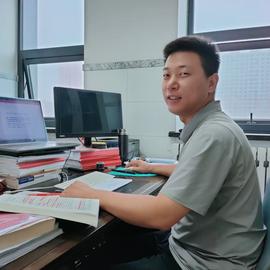
Dr. Haibo Yang
Lecturer (current)
My research interests include hyperspectral remote sensing, precision agriculture, and nitrogen nutrient management.
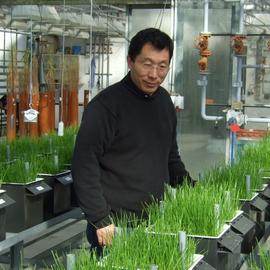
PD. Dr. Yuncai Hu
Senior Researcher
My research interests include Remote sensing, Precision N nutrient management, Plant phenotyping for complex traits of abiotic stress tolerance, Agricultural N emissions, and Physiological mechanisms of plant responses to abiotic stresses.
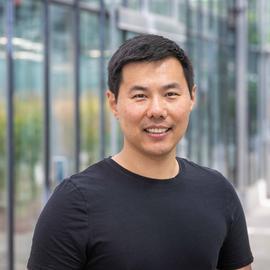
Prof. Dr. Kang Yu
Professor of Precision Agriculture
My research interests include precision crop farming, hyperspectral remote sensing, and AI in agriculture.