Physics-informed machine learning and Vision Transformer for predicting photosynthetic traits, biomass, and grain yield in winter wheat using UAV multispectral imagery
Abstract
Predicting crop photosynthetic traits from UAV imagery requires frameworks that connect canopy-level spectral observations to leaf-level physiological processes. Existing approaches rely on empirical vegetation indices (VIs) and standard machine learning models, lacking physical interpretability and appropriate deep learning architectures for image data. We developed a physics-informed multi-output machine learning framework that combines PROSAIL radiative transfer model inversion-derived biophysical parameters with spectral VIs and texture features (TFs), applies two spatial deep learning architectures, a Vision Transformer (ViT) and a 2D convolutional neural network (CNN), to multispectral image patches, and introduces a hybrid architecture that fuses PROSAIL-derived features with ViT spatial embeddings. The framework was evaluated for predicting CO2 assimilation rate (A), stomatal conductance (gsw), Photosystem II efficiency (Fv’/Fm’), aboveground biomass (AGB), and grain yield in a subset of seven European winter wheat varieties selected from a larger 18-variety field experiment across two growing seasons (2022–2024). Model performance was evaluated using random hold-out tests and leave-one-variety-out (LOVO) validation with bootstrap confidence intervals. For grain yield, the best tabular models achieved R2 = 0.92–0.96, and the ViT on image patches achieved a competitive R2 = 0.92. ViT delivered the best performance in predicting gsw. BorutaSHAP selected PROSAIL-derived features alongside empirical VIs, confirming that physics-informed features provide complementary information. The hybrid ViT+PROSAIL model matched or outperformed ViT-only for most traits under LOVO validation, with the clearest gain observed for grain yield, indicating that physics-based features can help regularize spatial representations for improved cultivar-level transferability. This study demonstrates that integrating radiative transfer model physics with spatial deep learning advances UAV-based high-throughput phenotyping of photosynthetic traits in breeding programs.
Jingcheng Zhang & Kang Yu (2026). Physics-informed machine learning and Vision Transformer for predicting photosynthetic traits, biomass, and grain yield in winter wheat using UAV multispectral imagery. European Journal of Agronomy, 180: 128202.
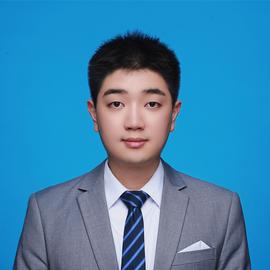
Jingcheng Zhang
PhD student
My research focuses on UAV-based phenotyping, hyperspectral remote sensing, and modeling of photosynthetic traits and yield in winter wheat.

Prof. Dr. Kang Yu
Professor of Precision Agriculture
My research interests include precision crop farming, hyperspectral remote sensing, and AI in agriculture.