Welcome to the PrecisionAg Lab@TUM
Since its founding in 2020, the TUM Precision Agriculture Lab has been committed to empower smart farming research, education, and practice.
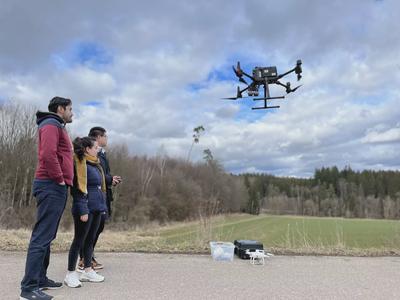
Latest News

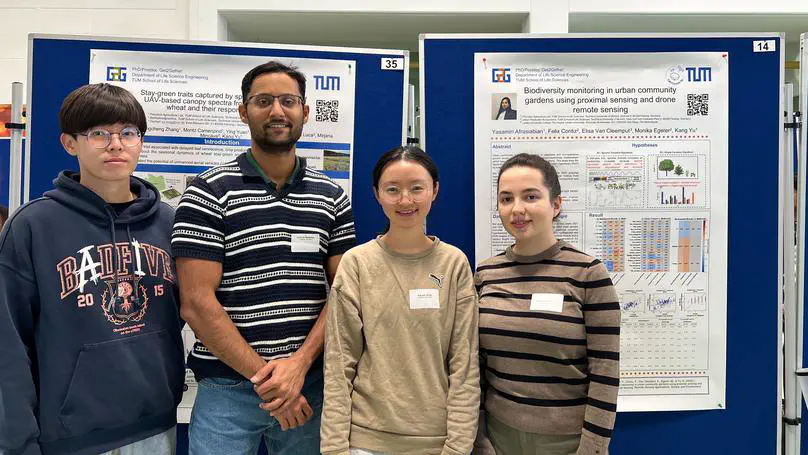

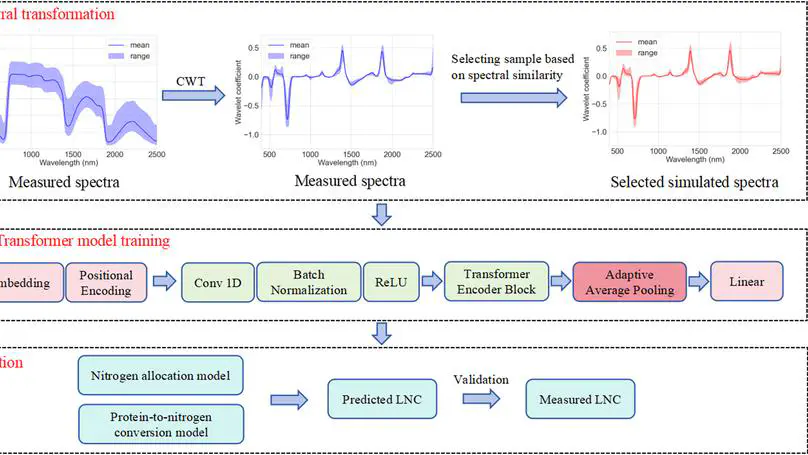
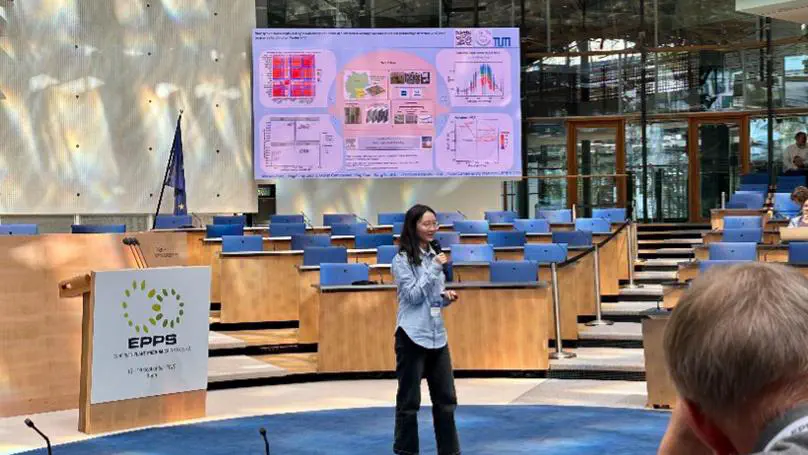
Latest Journal Papers
(2025).
High-throughput phenotyping of canopy dynamics of wheat senescence using UAV multispectral imaging.
Smart Agricultural Technology.
(2025).
UAV hyperspectral remote sensing for crop nitrogen monitoring: progress, challenges, and perspectives.
Smart Agricultural Technology.
(2025).
DeepSpecN: A new hybrid method combining PROSPECT-PRO and Conv-Transformer to estimate leaf nitrogen content from leaf reflectance.
Plant Phenomics.
(2025).
A more precise retrieval of sun-induced chlorophyll fluorescence from satellite data using artificial neural networks.
Remote Sensing of Environment.
(2025).
A UAV-Proxied Satellite Remote Sensing Approach for Winter Wheat Plant Nitrogen Concentration Mapping.
IEEE Journal of Selected Topics in Applied Earth Observations and Remote Sensing.